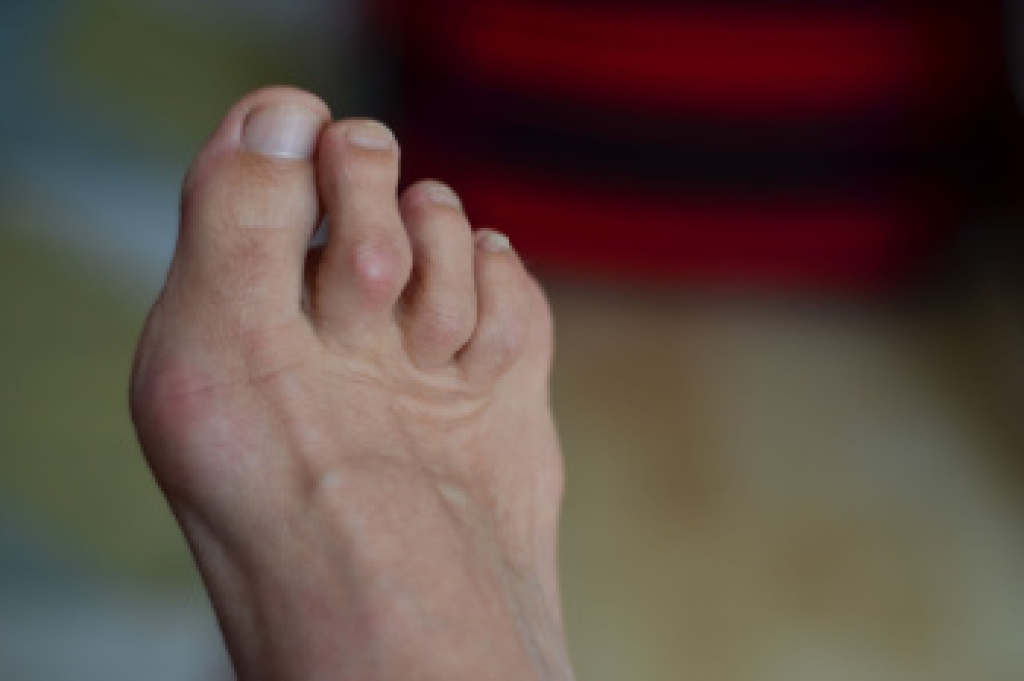
Some foot problems seem to run in families, even when people live different lifestyles. One example is a shift in the big toe toward the others, often leading to a noticeable bump at the joint, or a bunion. Changes in the smaller toes, such as curling or bending, can also appear across generations. This pattern suggests that inherited traits may influence how bones, joints, and soft tissues develop and respond to pressure over time. Studies have observed these patterns in certain populations, especially among individuals with shared ancestry, pointing to a strong link between family background and these common changes in foot structure. While shoes and activity still matter, they may not tell the whole story. Understanding these patterns may lead to better ways to identify risk early and guide care. If you notice similar foot concerns in your family, it is suggested that you see a podiatrist for an evaluation and support.
Hammertoe
Hammertoes can be a painful condition to live with. For more information, contact one of our doctors from Apache Foot & Ankle Specialists. Our doctor will answer any of your foot- and ankle-related questions.
Hammertoe is a foot deformity that affects the joints of the second, third, fourth, or fifth toes of your feet. It is a painful foot condition in which these toes curl and arch up, which can often lead to pain when wearing footwear.
Symptoms
- Pain in the affected toes
- Development of corns or calluses due to friction
- Inflammation
- Redness
- Contracture of the toes
Causes
Genetics – People who are genetically predisposed to hammertoe are often more susceptible
Arthritis – Because arthritis affects the joints in your toes, further deformities stemming from arthritis can occur
Trauma – Direct trauma to the toes could potentially lead to hammertoe
Ill-fitting shoes – Undue pressure on the front of the toes from ill-fitting shoes can potentially lead to the development of hammertoe
Treatment
Orthotics – Custom made inserts can be used to help relieve pressure placed on the toes and therefore relieve some of the pain associated with it
Medications – Oral medications such as anti-inflammatories or NSAIDs could be used to treat the pain and inflammation hammertoes causes. Injections of corticosteroids are also sometimes used
Surgery – In more severe cases where the hammertoes have become more rigid, foot surgery is a potential option
If you have any questions, please feel free to contact our office located in Las Vegas, NV . We offer the newest diagnostic and treatment technologies for all your foot care needs.
